
Industrial metal fabrication across the UAE and Qatar is moving toward faster, more automated, and precision-focused production. Manufacturers are under increasing pressure to shorten lead times, reduce material waste, improve component accuracy, and handle complex customer requirements without compromising quality. In this environment, choosing the right laser cutting technology can have a direct impact on production capacity and long-term competitiveness.
BODOR Laser Cutting Machines Distributors in UAE and Qatar support businesses looking to adopt advanced laser cutting technology for modern metal processing operations. From sheet metal fabrication and structural components to precision engineering and high-volume manufacturing, the right laser cutting system can transform how raw materials move through a production facility.
Through Fabricast, businesses can explore suitable BODOR laser cutting solutions based on their materials, production volumes, cutting requirements, and future manufacturing objectives.
This guide takes a practical approach to laser cutting machine selection, focusing on the questions manufacturers should answer before investing in new equipment.
Start With Your Production Bottleneck, Not the Machine Specification
When companies consider upgrading their cutting equipment, the first instinct is often to compare laser power, cutting speed, or machine size.
However, a better starting point is identifying the bottleneck in the existing production process.
For example, is the business experiencing:
- Slow cutting cycles?
- Excessive material waste?
- High secondary finishing requirements?
- Inconsistent component dimensions?
- Increasing customer demand?
- Difficulty producing complex geometries?
- Long machine setup times?
Understanding the actual production challenge makes it easier to determine which technology can deliver meaningful improvements.
Experienced BODOR laser cutting machine suppliers can help businesses evaluate equipment based on operational requirements rather than simply choosing the highest specification available.
Why Fiber Laser Technology Has Changed Metal Processing
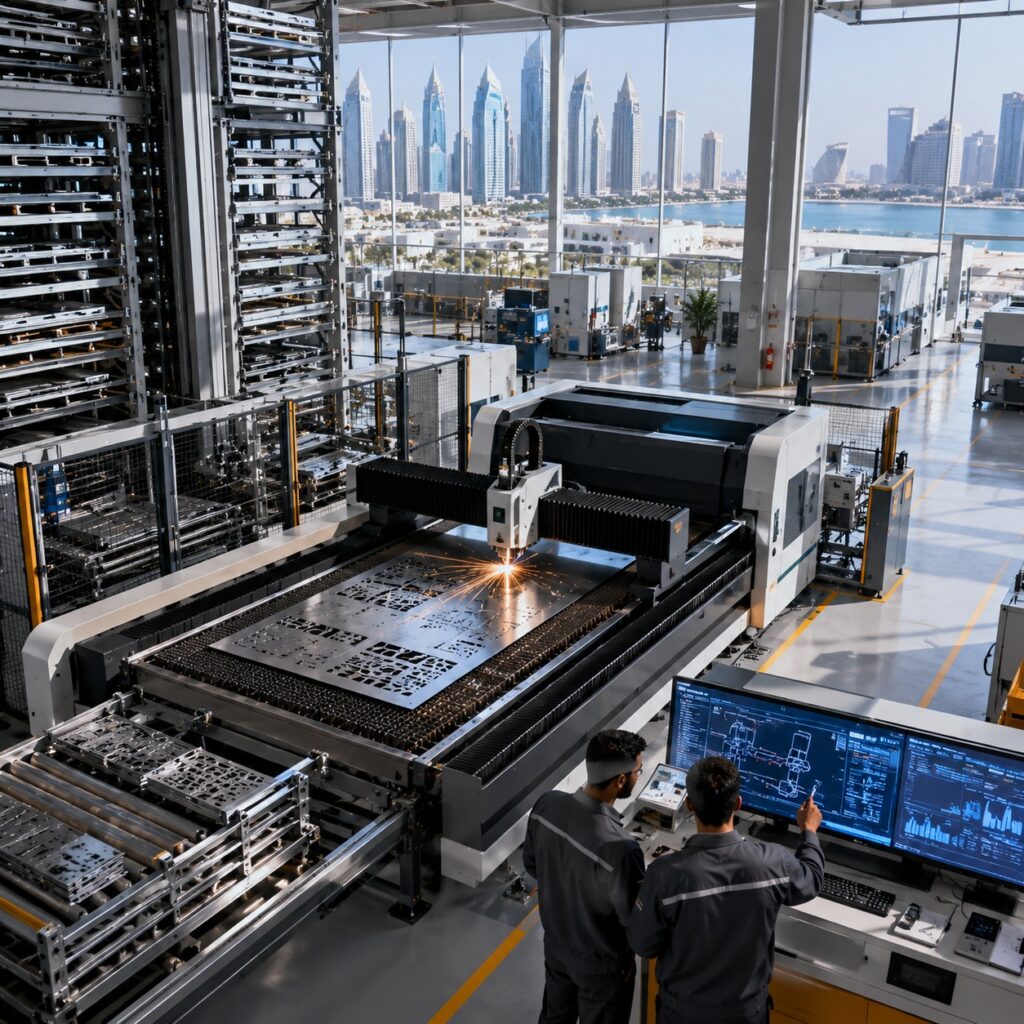
Fiber laser technology has become increasingly important in modern sheet metal processing because of its ability to combine speed, precision, and automation.
Depending on machine configuration and material requirements, fiber laser systems can process metals commonly used across industrial applications, including:
- Mild steel
- Stainless steel
- Aluminium
- Brass
- Copper
- Galvanized materials
For manufacturers processing significant volumes of sheet metal, fiber laser cutting machines UAE can provide an efficient foundation for automated production.
Similarly, businesses expanding manufacturing operations in Qatar can evaluate fiber laser cutting machines Qatar according to their specific material and capacity requirements.
The key is not simply adopting fiber laser technology—it is selecting a machine configuration that matches the production environment.
Think About Material Mix Before Choosing Laser Power
Laser power is one of the most discussed specifications when purchasing a cutting machine.
But more power does not automatically mean better value.
A company primarily cutting relatively thin sheet metal may have completely different requirements from a heavy fabrication business processing thicker materials.
Before selecting equipment, manufacturers should document:
- Materials processed regularly.
- Typical material thickness.
- Maximum thickness requirements.
- Average batch size.
- Daily cutting hours.
- Required edge quality.
This information provides a much stronger foundation for selecting industrial laser cutting equipment.
Choosing an unnecessarily powerful system can increase capital expenditure without delivering proportional operational benefits. On the other hand, selecting insufficient capacity may limit future production growth.
The objective should be to achieve the right balance between current demand and future opportunity.
Calculate Production Capacity Before Investing
A laser cutting machine is rarely purchased only for today’s workload.
For many manufacturers, the equipment is expected to support production for years.
Therefore, buyers should estimate how their workload could change.
Consider a fabrication company currently processing 50 sheets per day. If customer demand increases significantly over the next three years, will the proposed machine still support production requirements?
This is where capacity planning becomes essential.
Manufacturers should consider:
- Current daily production
- Expected business growth
- Peak production periods
- Machine utilization
- Shift patterns
- Potential new contracts
Businesses investing in CNC laser cutting solutions should select equipment that provides sufficient flexibility for future production without significantly oversizing the initial investment.
Cutting Speed Is Only One Part of Productivity
Machine speed often receives the most attention during equipment evaluation.
However, the fastest cutting machine does not necessarily create the fastest factory.
Overall productivity depends on the entire production workflow.
Consider what happens before and after cutting.
Material must be:
- Stored
- Retrieved
- Loaded
- Positioned
- Cut
- Unloaded
- Sorted
- Transferred to the next process
If loading and unloading are inefficient, a high-speed machine may spend valuable time waiting for material.
This is why modern automated laser cutting systems increasingly focus on the complete production cycle rather than cutting speed alone.
Automation options can help manufacturers reduce manual handling and create smoother material movement through the facility.
Nesting Software Can Have a Major Impact on Material Costs
Raw material represents a significant operating expense for many fabrication businesses.
Even small improvements in sheet utilization can generate meaningful savings when multiplied across thousands of sheets.
Nesting software helps arrange components efficiently within available sheet dimensions.
Effective nesting can potentially:
- Reduce scrap
- Improve sheet utilization
- Simplify production planning
- Increase cutting efficiency
- Reduce unnecessary machine movements
Manufacturers evaluating precision sheet metal cutting technology should therefore consider software capabilities alongside hardware specifications.
A technically advanced machine combined with inefficient production programming may fail to achieve its full economic potential.
UAE Manufacturing Environments Have Diverse Cutting Requirements
The UAE supports a broad industrial ecosystem, ranging from construction and architectural fabrication to aerospace, transportation, energy, and specialized manufacturing.
Laser cutting equipment may be used to produce:
- Architectural metal panels
- Electrical cabinets
- Industrial enclosures
- Machine components
- Structural parts
- HVAC components
- Decorative metal products
For companies searching for a laser cutting machine distributor UAE, application knowledge can be particularly valuable.
A distributor familiar with different fabrication environments can help customers evaluate machine size, power, automation options, software requirements, and production expectations before purchasing.
Qatar’s Industrial Development Creates Opportunities for Advanced Fabrication
Qatar’s manufacturing and engineering sectors support infrastructure, energy, construction, utilities, transportation, and industrial development.
As local fabrication capabilities expand, businesses increasingly require technology that can produce components with greater consistency and efficiency.
A professional laser cutting machine supplier Qatar can help manufacturers determine whether equipment is suitable for their intended materials and production environment.
This consultation becomes particularly important when companies are transitioning from conventional cutting methods to CNC-controlled laser systems.
The move to laser technology may affect more than the cutting department. It can influence material planning, production scheduling, operator training, and downstream fabrication processes.
Evaluate the Entire Cost of Ownership
The purchase price of a laser cutting machine is only one component of the investment.
Businesses should evaluate the total cost of ownership.
Potential considerations include:
- Electricity consumption
- Assist gas requirements
- Consumable components
- Preventive maintenance
- Replacement parts
- Software
- Operator training
- Machine downtime
The lowest initial price may not always provide the lowest long-term operating cost.
Manufacturers considering high-performance laser cutting machines should evaluate productivity and operating expenses together.
For example, a machine that improves material utilization and reduces secondary finishing could generate savings beyond the cutting department itself.
Factory Layout Can Influence Machine Performance
Installing advanced cutting technology into an inefficient production layout can limit its potential.
Before installation, manufacturers should evaluate how materials will move through the factory.
Important questions include:
- Where will raw sheets be stored?
- How will materials reach the machine?
- Where will finished components be placed?
- Is there sufficient space for loading?
- Will automation be added later?
- Can forklifts move safely around the equipment?
Planning these details before installation can help prevent workflow problems.
Companies investing in smart metal fabrication technology should consider equipment placement as part of a broader production strategy.
Questions to Ask Before Requesting a BODOR Laser Cutting Machine Quote
A well-prepared equipment enquiry helps distributors recommend more appropriate solutions.
Before requesting a quotation, businesses should prepare information about:
- Primary material types
- Minimum and maximum thickness
- Sheet dimensions
- Expected daily production
- Required cutting quality
- Available factory space
- Electrical infrastructure
- Automation requirements
- Future capacity expectations
This information allows BODOR Laser Cutting Machines Distributors in UAE and Qatar to better understand the intended application.
Instead of starting with “Which machine is best?”, buyers can ask a more useful question: “Which configuration best fits our production process?”
Why Choose Fabricast for BODOR Laser Cutting Solutions?
Industrial equipment investment requires careful technical and commercial evaluation.
Fabricast supports businesses looking for advanced fabrication technologies by helping customers assess equipment according to real production requirements.
Companies can consider factors such as:
- Material specifications
- Cutting thickness
- Production volume
- Factory workflow
- Automation objectives
- Future expansion
Through Fabricast, customers searching for BODOR Laser Cutting Machines Distributors in UAE and Qatar can explore laser cutting solutions suited to modern fabrication and manufacturing operations.
The objective is to help businesses select technology that contributes to measurable improvements in productivity, precision, and manufacturing efficiency.
Conclusion
Investing in laser cutting technology is not simply about purchasing a faster cutting machine. It is an opportunity to rethink how materials move through the entire fabrication process.
Manufacturers in the UAE and Qatar should evaluate their production bottlenecks, material mix, cutting thickness, factory layout, automation requirements, and future growth before selecting equipment.
Working with experienced BODOR Laser Cutting Machines Distributors in UAE and Qatar can help businesses identify equipment configurations aligned with practical manufacturing requirements.
With the right combination of machine capability, software, workflow planning, operator knowledge, and technical support, advanced laser cutting technology can become a powerful foundation for more efficient and competitive metal fabrication.
Frequently Asked Questions
What is the focus keyphrase for this article?
The primary focus keyphrase is BODOR Laser Cutting Machines Distributors in UAE and Qatar.
What materials can fiber laser cutting machines process?
Depending on the machine configuration, laser power, and application, fiber laser systems are commonly used for processing materials such as mild steel, stainless steel, aluminium, brass, copper, and galvanized metal.
How do I choose the right laser cutting machine?
Start by evaluating your material types, thickness range, sheet dimensions, production volume, required edge quality, available factory space, and future capacity requirements.
Should I choose the highest laser power available?
Not necessarily. The appropriate laser power depends on the materials, thicknesses, cutting speeds, and production requirements of your business. Higher power should provide a clear operational benefit before additional investment is justified.
Is automation necessary for a laser cutting machine?
Automation can improve material handling and production efficiency, particularly in high-volume environments. However, the appropriate level of automation depends on production volume, labor requirements, factory layout, and investment objectives.
Why is distributor support important?
Professional distributor support can assist with equipment selection, application requirements, technical guidance, installation planning, and long-term equipment support.
